The job of an opening
On a drama app the viewer decides in the first few seconds whether to stay. A microdrama opening has to set up a threat, a secret and a question before the title appears, on a phone held in one hand.
The Last Bloom does all three in 21 seconds, with four shots and three spoken lines.
Four shots, twenty one seconds
0:00 to 0:06 · The wrist. A close up of a woman's wrist with a thin silver line under the skin. A man's hand, wedding ring on the finger, closes around it. A cold male voice says: "Show me your other arm."
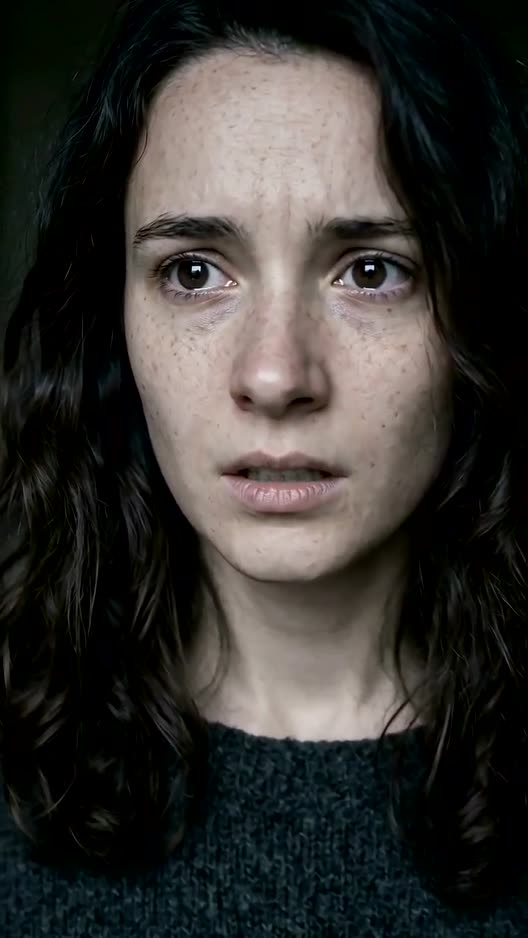
0:06 to 0:12 · The face. She looks at him, frightened, across a run of close ups that move in on her. Her whispered voiceover: "If he sees it, I'm dead."
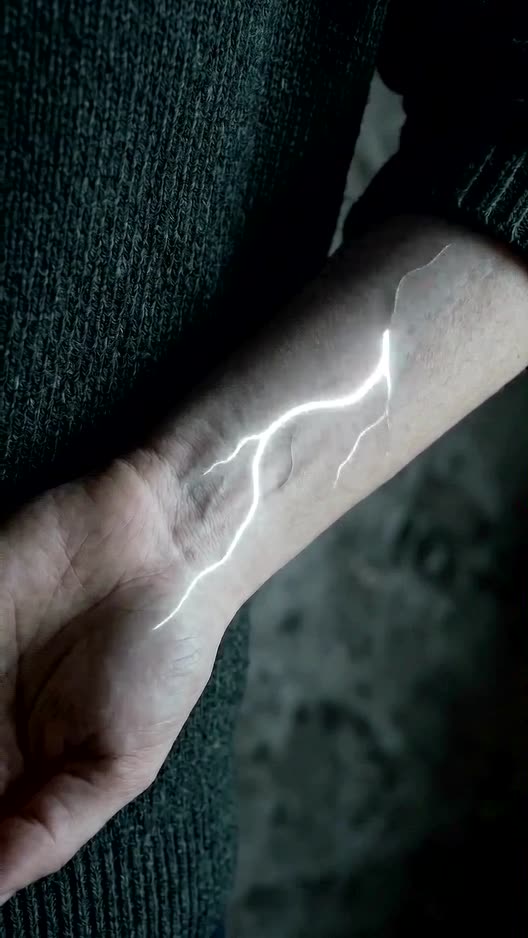
0:12 to 0:18 · The mark. Her forearm fills the frame. The silver line lights up and runs along the arm like a current. The voiceover carries on over the cut: "Three weeks ago I didn't know what this mark meant. Three weeks ago I'd never met him."
0:18 to 0:21 · The title. A beat of black, then THE LAST BLOOM in burning letters.
He wants to see her arm. She is hiding the mark.
And the answer starts three weeks ago.
Why it holds a viewer
The first frame is the secret. The silver line is on screen before anyone speaks, so the viewer knows something the man is only starting to suspect.
One spoken line sets the stakes. "Show me your other arm" tells us he suspects her, and that there is something on the other arm too.
The voiceover moves the clock. "Three weeks ago" opens a backstory and promises that the series will tell it.
The title lands on the question. The opening stops at the moment the viewer most wants the next scene. That is the moment an app asks someone to keep watching.
What was hard to make with AI
Hands. Close ups of hands are where AI video most often breaks: extra fingers, a ring that slides, a grip that melts into the arm. Here two hands meet in one frame and the grip has to read as pressure.
One face through every cut. Her face is seen in several close ups in a row. If her eyes, freckles or hair shift between them, the viewer stops believing her. Holding a character steady from shot to shot is the centre of our work, and the method is written up in keeping characters consistent in AI video.
Light under the skin. The silver line has to sit inside the arm and then light up along the same path. A glow that floats on top of the skin would look like a sticker.
Two voices. A flat, cold male voice against a whispered female voiceover. That contrast carries the tension a music score would carry in a longer film.
One palette. Muted greens and greys, soft light and a dark wall behind her in every shot, so four separate shots feel like one room and one moment.
Why only the opening is public
The script belongs to the studio that wrote it. We keep our client agreements, so the full episode is never posted. Message us on WhatsApp and we will share it privately.
Making yours
Send a script, a treatment or a story idea. No script yet? We build one together. Tell us the look you want (realistic or animated), the language and where the series will run.
A microdrama episode starts from $300, usually $300 to $900 depending on length, cast and detail. Every episode includes 1 revision. We make vertical drama in 19 languages with voiceover, lip sync and subtitles, and extra language versions are priced in your quote. Full prices are on the pricing page, and the microdrama pilot cost guide explains what moves the price.
Not sure yet? Send us one scene and we make a free sample of it, for a limited time. More on the format: microdramas and cinematic shorts.
Questions